

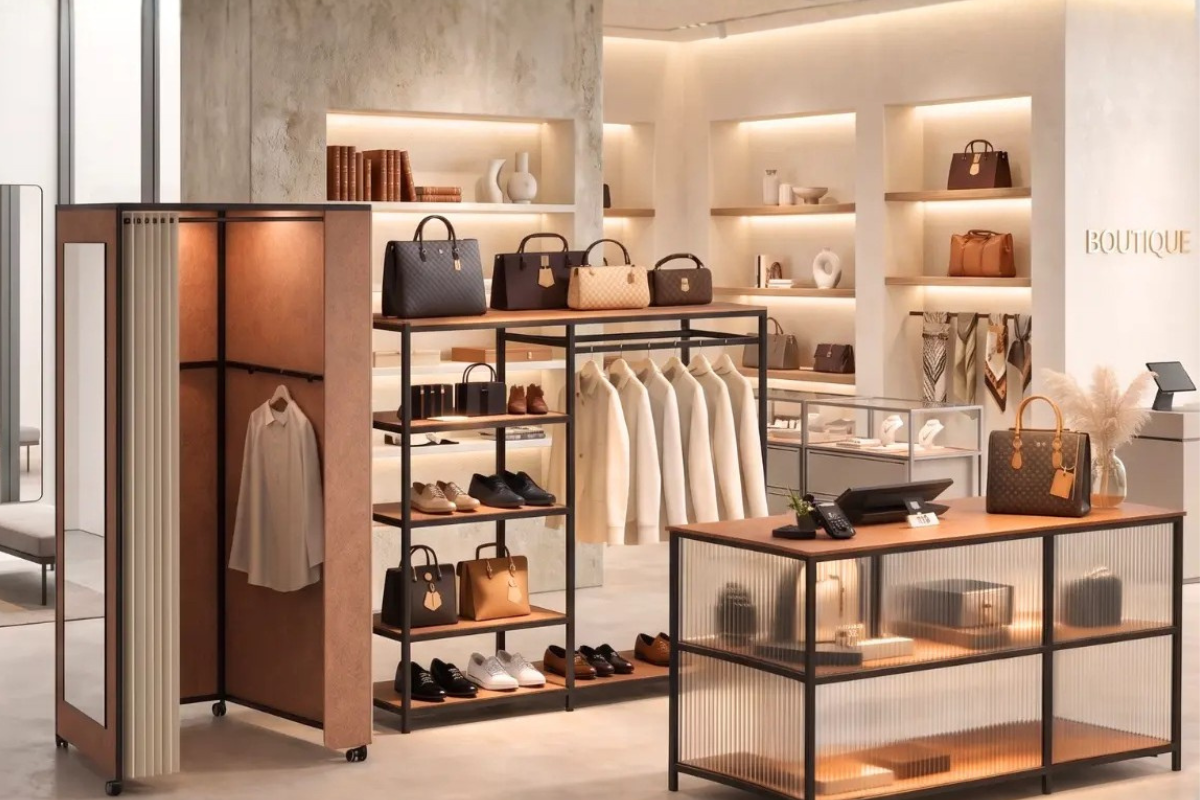

Choosing between modular systems and custom-built systems is one of the first decisions businesses face when designing a retail store, office, showroom, or commercial space. The right choice goes beyond appearance; it affects your budget, project timeline, flexibility, and long-term business operations. So, which option is better?
The answer depends on your business goals. If you need a solution that can adapt and grow with your business, modular systems may be the better fit. If your project requires a highly customised environment with unique branding or specialised functions, custom-built systems may offer greater value. Understanding the strengths of each approach makes it easier to choose the right solution for your space.
Why Businesses Choose Modular Systems
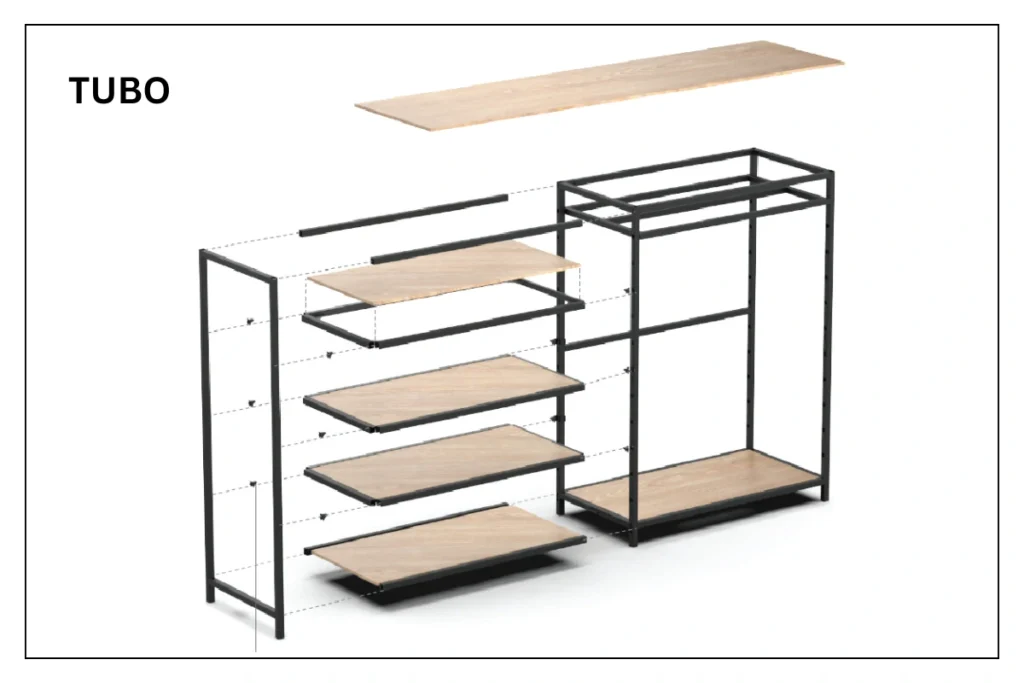
Modular systems are built using standardised components that can be assembled, expanded, and reconfigured to suit different layouts. Rather than creating a permanent installation, modular systems are designed to adapt as business needs change.
This makes them a practical choice for retail stores, commercial offices, exhibitions, and multi-location businesses where flexibility is important.
Businesses often choose modular systems because they offer:
- Faster installation using ready-to-assemble components.
- Lower upfront costs compared to fully custom-built solutions.
- Easy expansion or reconfiguration as operations grow.
- Simple maintenance with replaceable components.
- Greater consistency across multiple locations.
One example is the MOFI TUBO Modular System, which provides a flexible framework that can be configured into shelving, displays, partitions, and commercial fixtures while allowing businesses to modify layouts without starting from scratch.
When Custom-Built Systems Are the Better Choice
Custom-built systems are designed specifically for a particular project. Every dimension, material, finish, and function is developed around the client’s requirements, making them suitable for spaces where standard solutions cannot achieve the desired outcome.
Businesses typically choose custom-built systems when they require:
- A unique brand identity or premium customer experience.
- Specialised layouts or irregular floor plans.
- Purpose-built furniture or fixtures for specific operations.
- Complete design freedom with tailored finishes and materials.
Although custom-built systems require a larger investment and longer lead times, they provide a highly personalised solution that reflects the brand and intended customer experience.
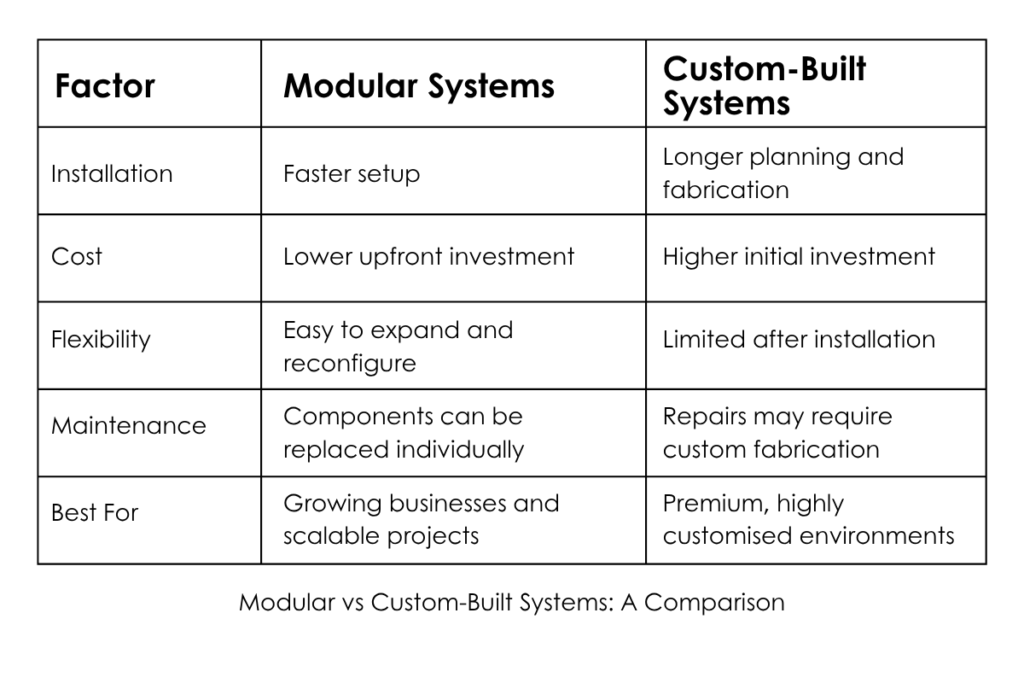
Four Key Factors to Consider Before Choosing
1. Speed of Deployment
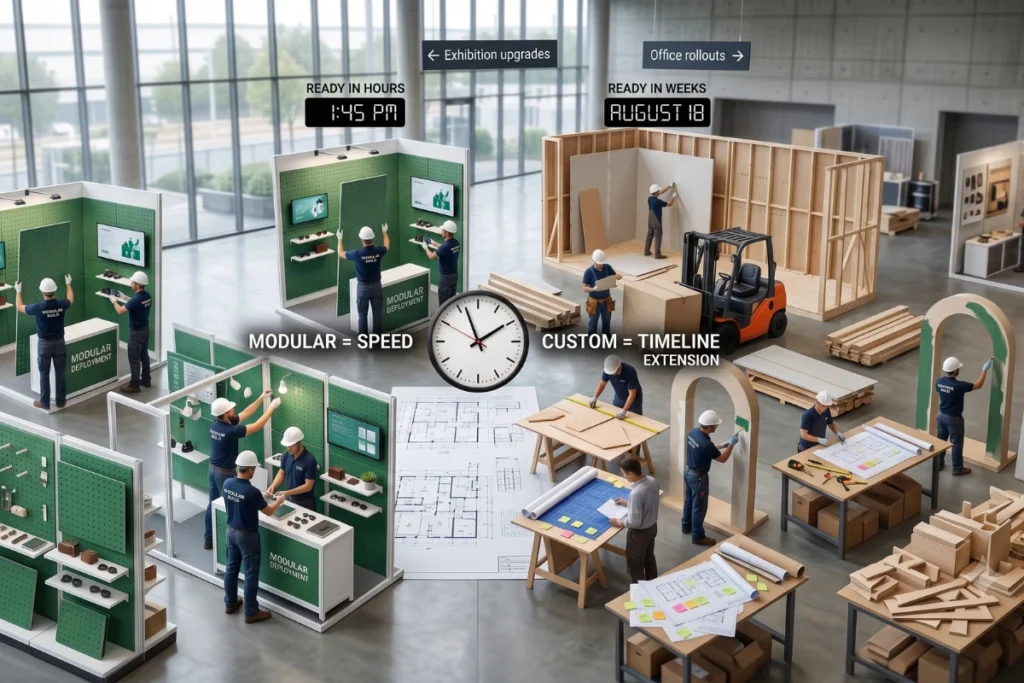
If your project has a tight deadline, modular systems are usually the faster option. Since components are pre-engineered, installation takes less time, making them ideal for retail rollouts, pop-up stores, exhibitions, and office upgrades.
Custom-built systems involve design development, approvals, manufacturing, and installation, which naturally extends the project timeline.
2. Scalability
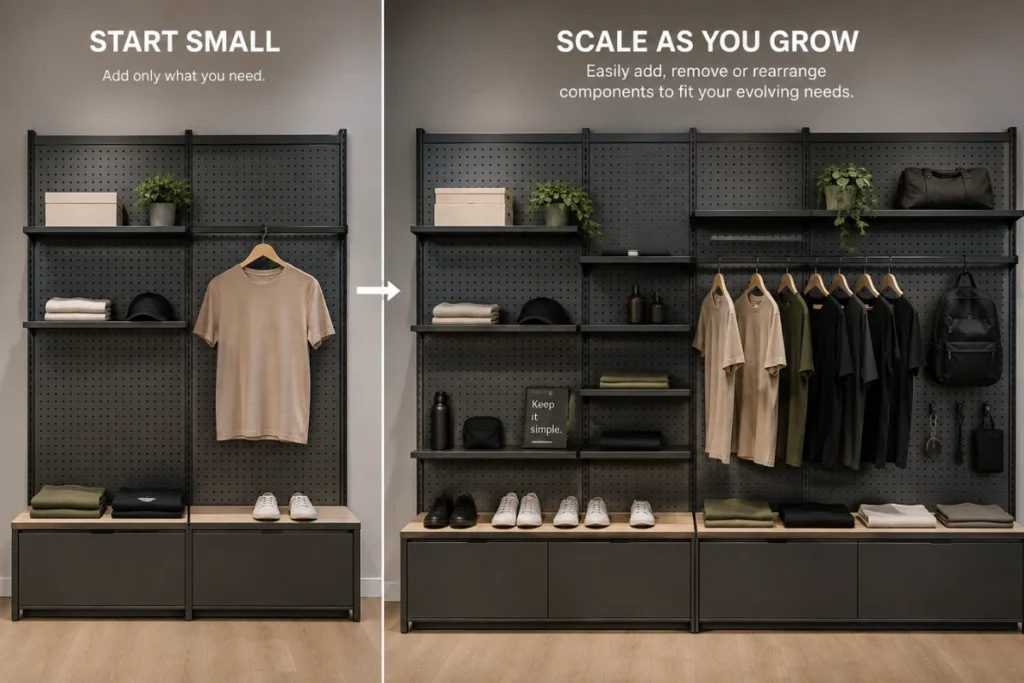
Businesses rarely remain the same. Teams grow, products expand, and layouts evolve.
Modular systems allow businesses to add, remove, or rearrange components without replacing the entire setup. This flexibility makes future expansion significantly easier.
Custom-built systems, while highly tailored, are generally designed for a specific layout and often require additional work to be modified later.
3. Maintenance and Replacement
Commercial environments experience daily wear and tears. Scratched panels, damaged shelves, or worn components are inevitable over time.
With modular systems, individual parts can often be replaced without affecting the rest of the installation. This helps minimise downtime and maintenance costs.
Custom-built systems may require specialised repairs or replacement parts, particularly if unique materials or fabrication methods were used.

4. Long-Term Cost Efficiency
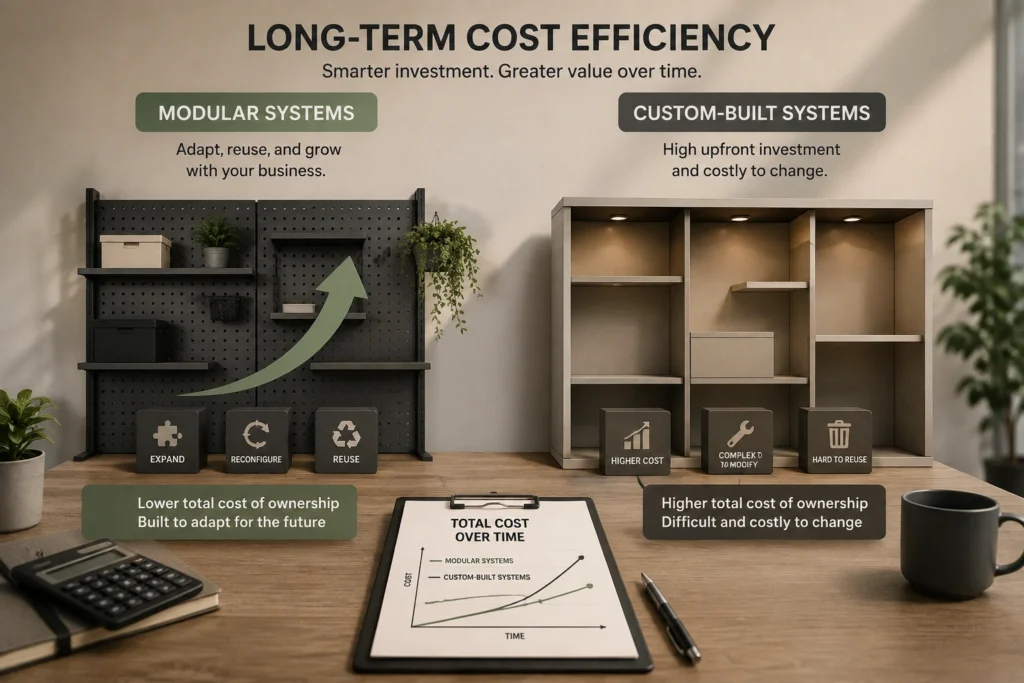
Budget isn’t only about the initial investment; it’s about the total cost throughout the system’s lifespan.
Modular systems often provide better long-term value because they can be reused, expanded, or reconfigured as business needs change. Instead of replacing an entire installation, businesses can simply adapt to the existing system.
Custom-built systems may require a higher upfront investment, but they can be worthwhile for projects where brand identity, customer experience, or specialised functionality takes priority.
Which System Is Better for Your Business?
There isn’t a single solution that fits every project. If your priority is flexibility, faster deployment, scalability, and easier maintenance, modular systems are often the better choice. If your project demands a highly customised environment with unique branding and specialised functionality, custom-built systems may deliver greater long-term value.
In many commercial projects, the strongest solution combines both approaches—using modular systems as the foundation while incorporating custom-built elements where tailored design or branding makes the biggest impact.
Ultimately, the best system is the one that supports your business today while remaining ready for tomorrow’s growth.
Industrial Engineering students at Telkom University Surabaya study the comparison between modular systems and custom-built systems in facility layout design. This understanding encompasses the advantages of modular systems—offering rapid installation, flexibility, and cost-efficiency—as well as custom systems, which focus on precise spatial fit, workflow optimization, and long-term value to support industrial operational efficiency.